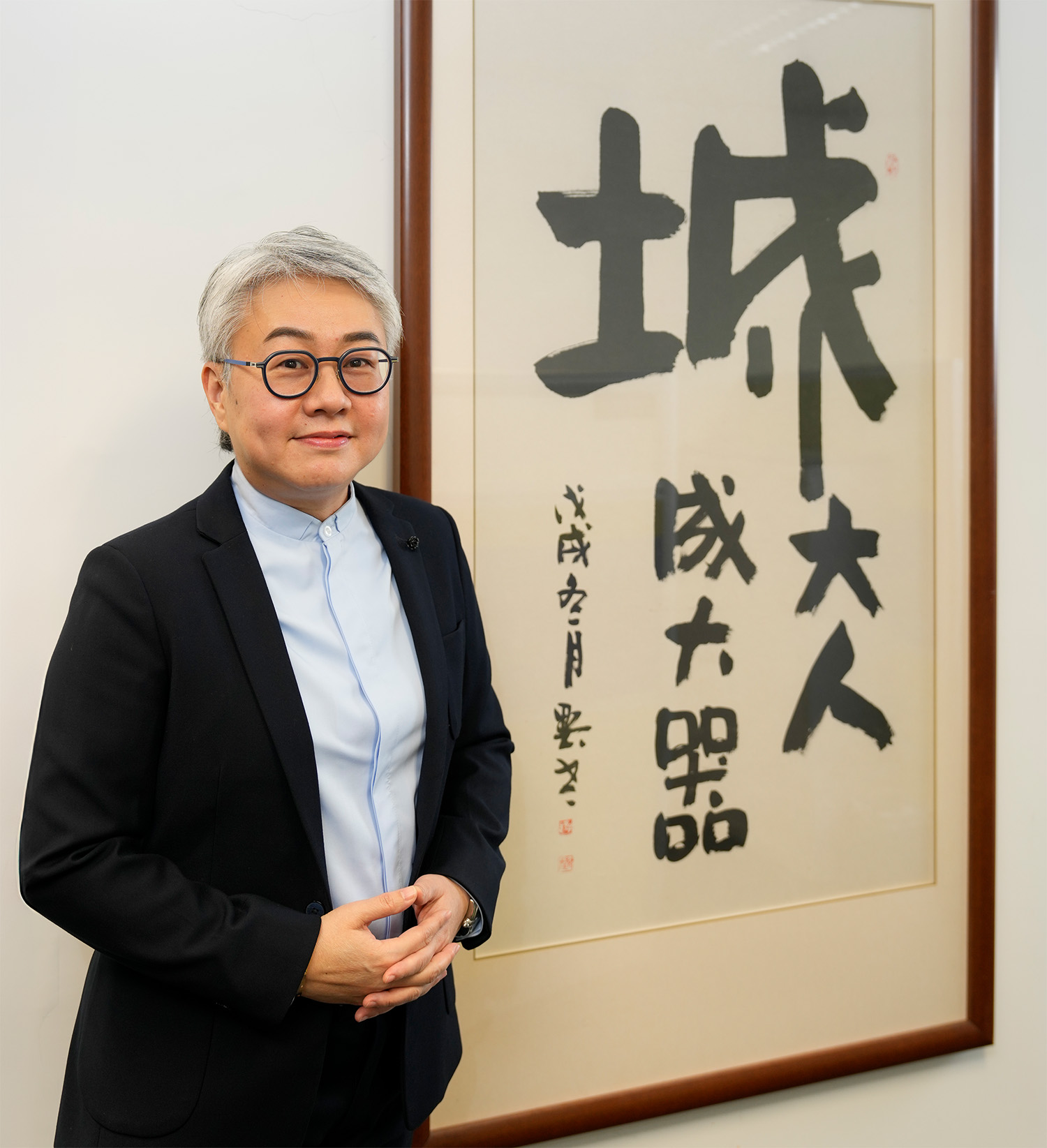
As the Group Chief Digital Officer (CDO) of Pico Group, an international brand activations and event management powerhouse, Dr Fareeda Cassumbhoy has orchestrated a sweeping digital transformation within her company to harness opportunities to capture valuable customer interaction data from physical events. Beyond the corporate sphere, she has returned to academia, grounding her strategic insights in rigorous academic inquiry through completing the CityUHK DBA. Her career expertise spans the digital frontier of the advertising world, as well as physical event innovation.
Pico Group, with a humble beginning in 1969 as a corporate logo painter in Singapore, has evolved over the decades into a global leader in designing, planning, and executing brand activations and physical experiences—from exhibition booths and grand-scale World Expo pavilions to dynamic auto shows, Formula One event overlays, and public spectacles such as the iLight festival in Singapore. When she joined Pico in 2018, she recognised a critical gap:
“A vast amount of customer interaction data generated in the physical event space was not being captured. My mission as CDO was a multi-phased digital transformation,” she recalls.
“The first step was getting rid of legacy infrastructure and fixing core processes. This involved installing new technology stacks to shift the company to a seamless digital operation.”
“The next step was using technology to satisfy the customer and grow the business. The third step is what we refer to as the new digital business model, similar to the models used by Uber or Airbnb. But that needed a lot of infrastructure fixing, data processing, and harnessing the insights from the experience.”
The Experience Quotient
One of Cassumbhoy’s most tangible strategic contributions is the development of an algorithm designed to measure the impact of a physical event.
“I created a scale called the ExQ™, the Experience Quotient, based on Relevance, Attention, and Interest,” she says.
“Relevance means making sure the right audience is at the event. This is tracked through detailed registration data—collecting information on a visitor’s company, title, and specific interests to assess if they are the target demographic.”
“Attention measures the depth of engagement within the experience. Technologies such as cameras and timestamps are used to track a person’s movement and dwell-time across different interactive zones or stations within a booth or event hall, revealing what content truly holds their focus.”
“Lastly, Interest quantifies the tangible actions taken by the attendee that indicate a buying or commitment intent. For a car show, this could be signing up for a test drive or finally buying the car.”
By providing a data-driven Return on Experience (ROX), Fareeda has elevated Pico from a service contractor to a strategic partner. As she says, “We have bridged the measurement gap between the ‘digital footprint’ tracked in online advertising and the often-unmeasured impact of physical brand encounters.”
Studying the Digital Leader
Fareeda’s corporate experience informed the foundation of her doctoral research at CityUHK. Under the guidance of Professor Robert M. Davidson, her case study—which examined a Chinese retail company known for its “wolf-like” corporate culture and agile, younger workforce—led her to complement the established “Upper Echelon” theory.
• The Mixed Echelon: Fareeda’s findings suggest that for DT to succeed, particularly in fast-moving sectors such as Chinese retail and e-commerce which rely heavily on platforms such as Meituan and Alibaba delivery, the CDO must be influenced by not only the traditional Top Management Team (TMT), but also the younger, technologically adept workforce (the “mixed echelon”). These younger employees are the best informants on emerging channels such as Douyin (TikTok) and are often key to proposing effective new business systems.
• Practical Insights: Her research highlighted the necessity of the TMT remaining intact and being fully committed to the long-term, multi-phase DT process, showing that the company she studied—with an intact TMT for eight years—was a rare success story.
Fareeda Cassumbhoy’s DBA study provides a significant human-centric perspective on digital transformation, offering vital insights into the dynamics, challenges, and necessary cultural shifts required for the CDO role to not only survive, but to thrive and drive genuine, lasting change.
Dr Cassumbhoy’s corporate work in the digital transformation of live brand activations and event management potentially has implications well beyond the business sphere. Universities, for example, may be interested in embedding lectures and seminars in such multi-phased digital transformations. We look forward with interest to Dr Cassumbhoy’s contributions to the College and DBA alumni associations and possibly wider arenas.